About
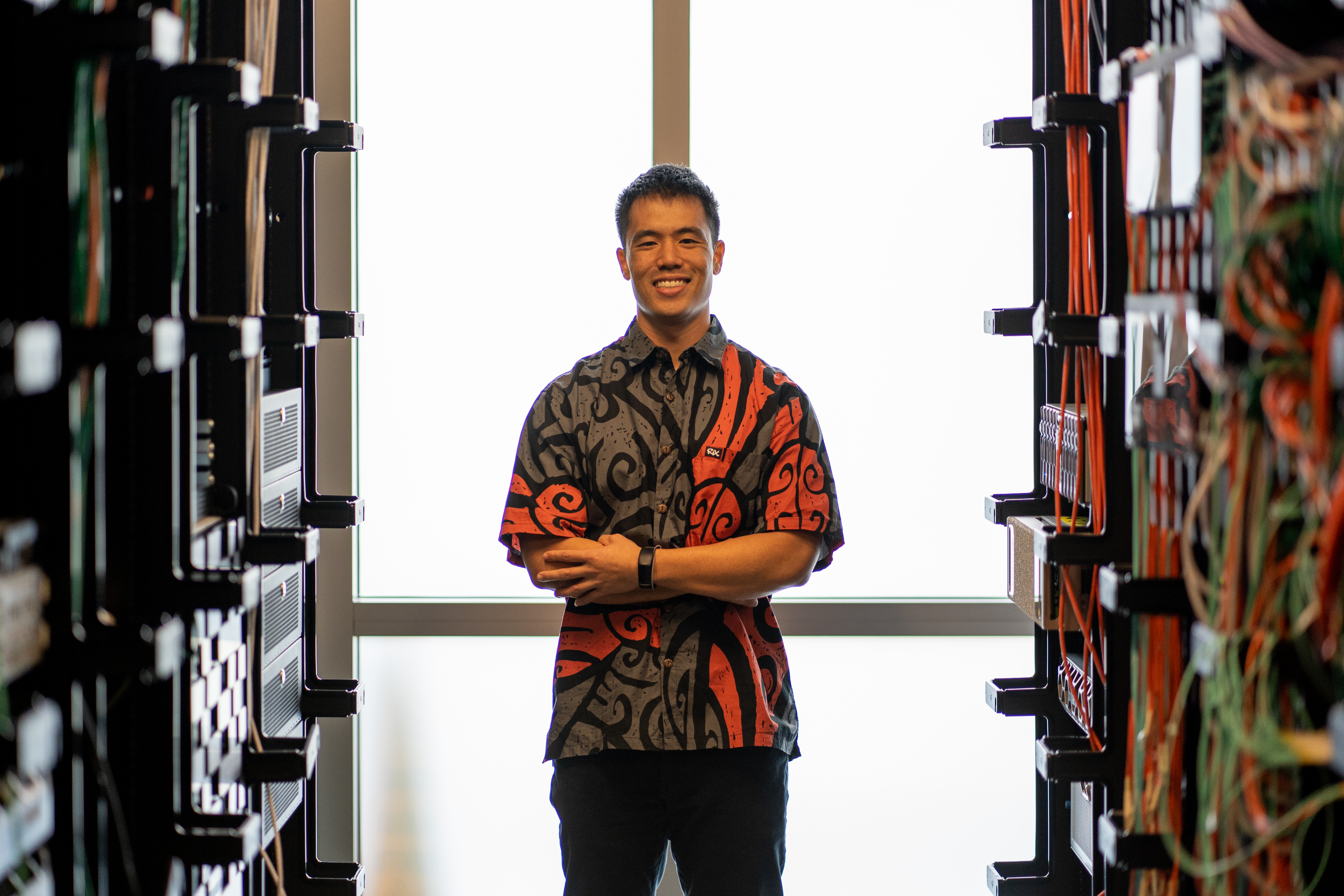
Hi, I am Lambert.
I am a Senior AI/ML Applied Scientist working in Health AI. My work sits at the intersection of machine learning research, software engineering, and healthcare delivery, with a focus on building artificial intelligence (AI) systems that are useful, measurable, and safe enough to matter in real-world clinical and operational settings.
At Optum AI, I lead and contribute to clinical generative AI (GenAI) evaluation, healthcare foundation models, structured electronic health record (EHR) modeling, and responsible AI governance. Recent work includes evaluation and monitoring for patient-affecting clinical GenAI products, large-scale autoregressive modeling over healthcare service patterns, and recommender-system applications that connect longitudinal data to better care navigation. In other words, I focus on the full path from model development to evidence generation, review, monitoring, and practical deployment.
I especially enjoy translating technical ideas across clinical, product, business, and engineering teams so that the right people can align around impactful solutions. That has included combining automated metrics, large language model (LLM)-as-judge evaluation, adversarial testing, clinical subject matter expert review, and continuous model monitoring for clinical AI systems. The common thread is evaluation discipline: making sure promising models are tested against the workflows, failure modes, and governance requirements that determine whether they can be trusted in healthcare.
Before Optum AI, I was a Postdoctoral Researcher with the OncoRad Research Core at the University of Washington School of Medicine, where I built clinically useful imaging and data tools for predictive biomarker research. My work included computed tomography (CT) segmentation, body-composition analysis, natural language processing (NLP) for case finding, and deep learning inference pipelines for clinical research. These projects strengthened my belief that healthcare AI needs both strong modeling and careful measurement, because clinical usefulness depends on much more than benchmark performance.
I earned my PhD in Bioengineering from the University of Hawaii, where my dissertation, “Reducing the Burden of Cancer with Artificial Intelligence,” focused on developing novel AI methods for breast cancer and body composition analysis. I also hold an MS in Computer Science and a BS in Biology, a combination that has shaped how I approach technical problems in medicine: with equal parts rigor, curiosity, and respect for the underlying biology.
Across industry and academia, I have worked on healthcare foundation models, generative AI, structured EHR modeling, recommender systems, natural language processing, self-supervised learning, computer vision, and medical imaging. I care a lot about evaluation, interpretability, governance, and building systems that clinicians and domain experts can actually trust. My work has contributed to patents, peer-reviewed publications, and awards including the 2026 Make IT Happen Award for healthcare foundation-model work and the 2023 Outstanding Dissertation Award.
I am also committed to mentorship and giving back to the scientific community through programs with Google and the National Institutes of Health (NIH). Originally from Hawaii, I have a deep love for the outdoors. In my free time, you will usually find me hiking, exploring new trails, and taking photographs of the landscapes around me.